

Epigenetic Age – DeepM Age clock, proprietary DNA Methylation clock is the most accurate
Genetic Biomarkers
±2.77 Years Error
Disease Detection
Lifestyle Driven
Uncover your epigenetic age — a state-of-the‐art clock powered by DNA methylation biomarkers. DeepM Age measures how your body is aging at the genetic regulation level, offering precise age prediction, early disease risk detection, and actionable lifestyle insights.
All-in-One AI-Powered Aging Analysis Platform
The Most Accurate Aging Clock
DNA Methylation Age is an epigenetic aging clock with an impressive error margin of just 2.77 years, making it the most accurate DNA methylation clock available. This advanced clock is closely associated with age-related conditions such as cancer, dementia, obesity, and other health concerns linked to aging.
Fast & Accessible SaaS Platform
DeepM Age detects people with these diseases to be older:
Dementia
Ovarian cancer
Multiple sclerosis
Hypopituitarism
Ulcerative colitis
Predictor for lifestyle reset
Epigenetic Age is a powerful predictor of health and lifespan, serving as a key indicator for lifestyle adjustments. DNA methylation-based biomarkers reveal strong correlations with lifestyle factors such as a healthy diet and educational attainment, offering actionable insights for optimizing well-being.

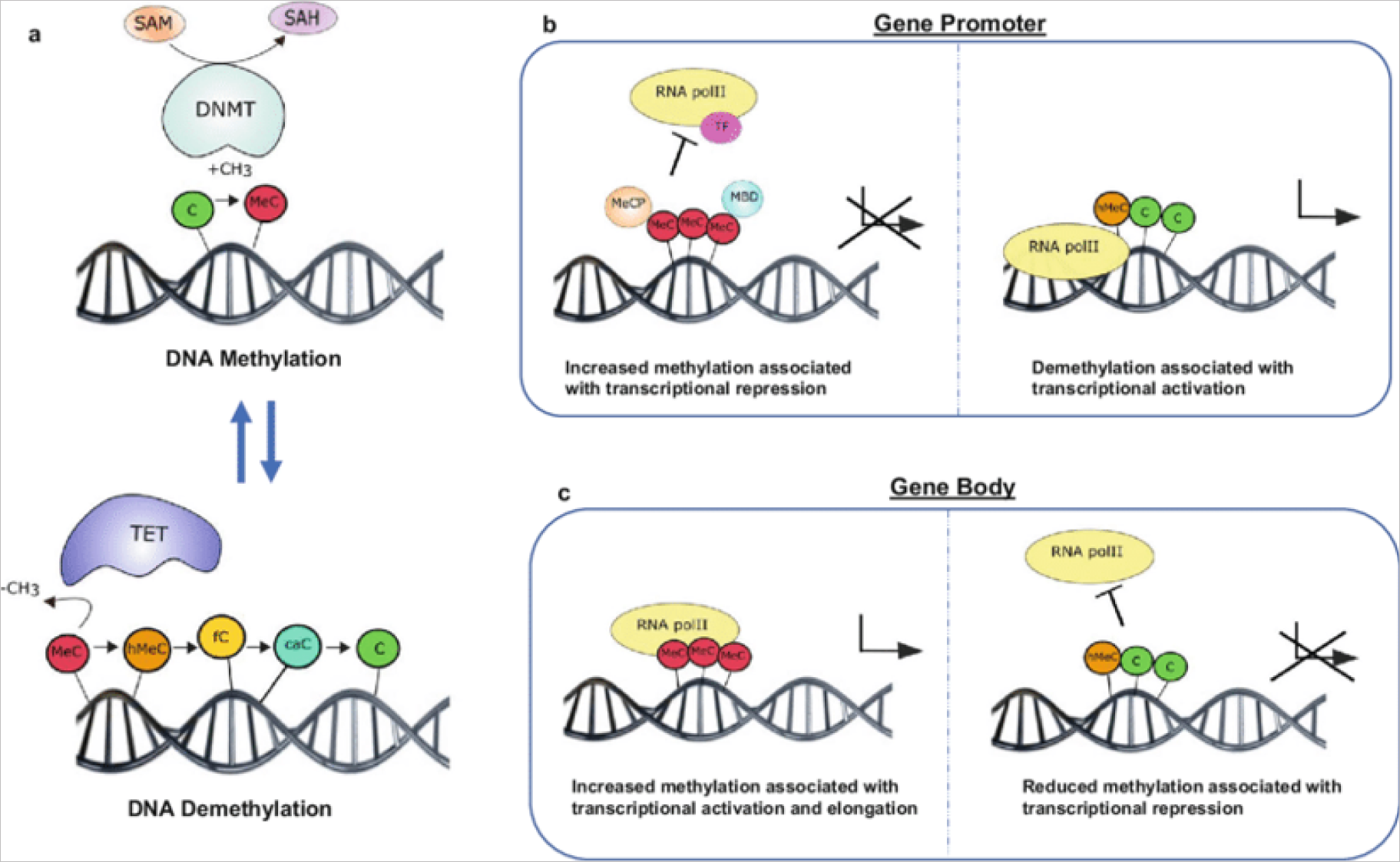
Gene promoter
Gene promoters are regulatory DNA sequences that initiate gene transcription, controlling when and how specific genes are expressed, ultimately influencing cellular functions, growth, and overall health.
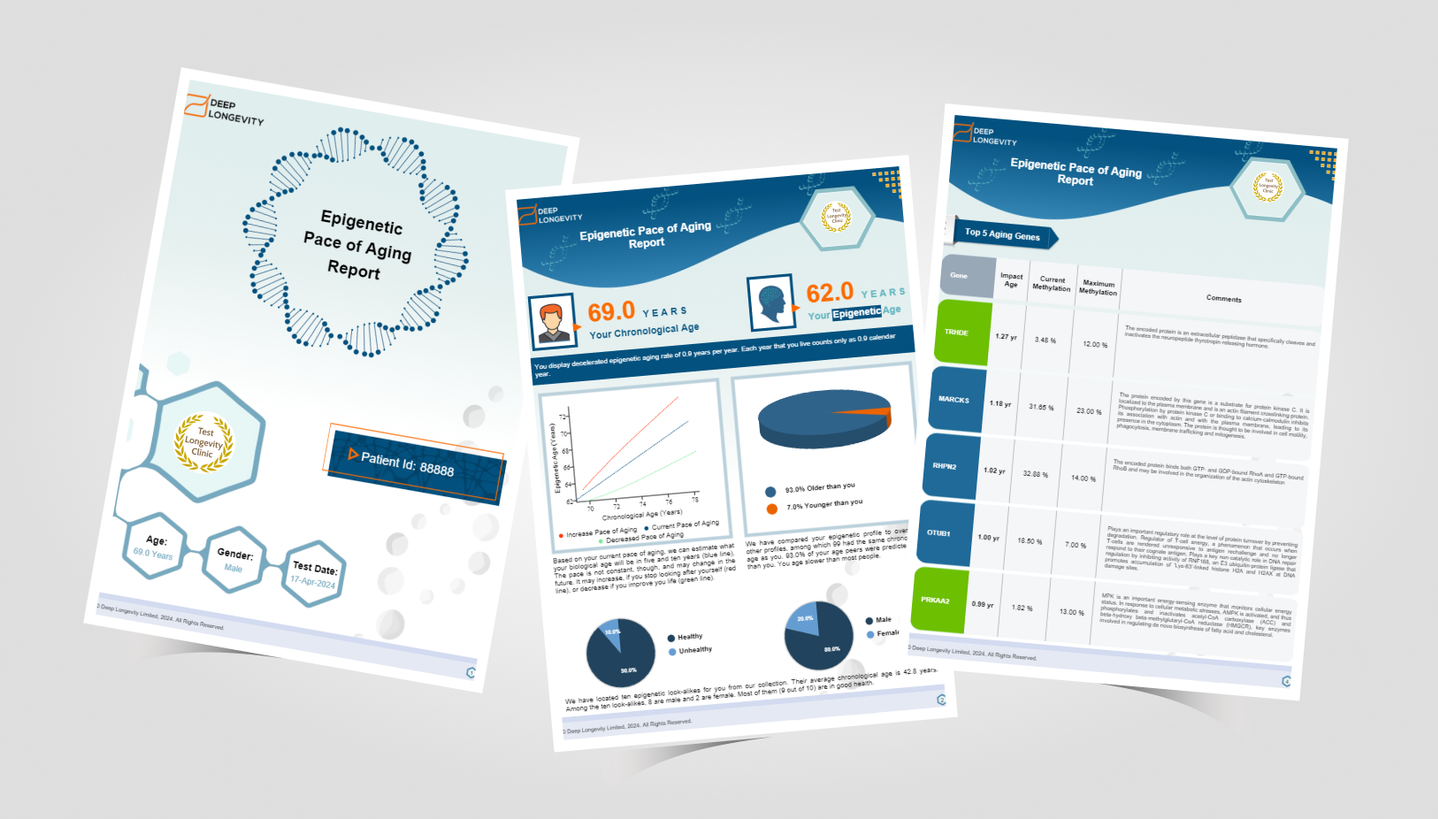
Epigenetic Pace of Aging Report
Discover How Your Genes Reveal the True Pace of Aging
Unlock the secrets of aging with our Epigenetic Age Report. Our advanced analysis provides insights into the aging process at a gene level, empowering you to make informed decisions about your health and well-being.
Mapping the Genetic Markers that Shape Your True Age
Visualize the relationship between your chronological and epigenetic ages through intuitive graphical representations. Explore the top 5 aging genes whose methylation level makes you look older, highlighting hypermethylated and hypomethylated regions for deeper insights. Understand the impact of epigenetic changes on your aging process. Our report identifies key markers, such as current methylation levels and predicted age, to gauge the effectiveness of your lifestyle choices on aging.
Take Control of Your Aging Journey
Don’t let aging define you. With our Epigenetic Age Report, you have the power to take control of your health and aging process. Gain invaluable insights, implement personalized recommendations, and embark on a journey towards a healthier, more vibrant life.
Ready to uncover your epigenetic age? Contact us today to get started!
Benefits & Validation
Key Benefits
Early disease detection, personalized lifestyle guidance, and deeper insight than traditional clocks.
Research & Accuracy
2.77 years average error. Associations with disease states (cancer, dementia, obesity, etc.). Peer-reviewed publications.
Access & Integration
API availability; report generation; secure data handling; trial / demo options.

Know more about Epigenetic Age
What is Epigenetic Age?
Epigenetic Age is a measure of biological aging derived from epigenetic markers—most commonly DNA methylation patterns. These markers regulate how genes are switched on or off without altering the underlying DNA sequence.
Unlike calendar age, Epigenetic Age reflects how lifestyle, environment, and internal biological processes influence aging at the molecular level.
How is Epigenetic Age different from Chronological Age?
Chronological age represents the number of years a person has lived. Epigenetic Age, however, reflects the functional and molecular condition of the body.
An individual’s Epigenetic Age may be lower or higher than their chronological age, indicating slower biological aging or accelerated aging, respectively.
How is Epigenetic Age calculated?
Epigenetic Age is calculated using scientifically validated machine-learning models trained on large population and longitudinal datasets.
These models analyze DNA methylation data from biological samples and convert complex molecular patterns into an age estimate that correlates with health outcomes, disease risk, and mortality.
What biological samples are required to measure Epigenetic Age?
Epigenetic Age analysis requires a DNA-based biological sample using blood sample.
The specific sample type depends on laboratory workflows, regulatory standards, and regional requirements.
How accurate and scientifically validated is Epigenetic Age?
Epigenetic Age is among the most scientifically validated biomarkers of biological aging.
DNA methylation–based aging clocks demonstrate a high level of accuracy, with a typical prediction error of approximately 2.77 years, placing them among the most precise epigenetic aging models currently available.
What insights does Epigenetic Age provide beyond age estimation?
Beyond estimating biological age, Epigenetic Age offers insights into:
- Pace of aging
- Biological resilience
- Long-term lifestyle and environmental impact
- Diet and Exercise plan
It can also be used to track biological changes over time and assess the effectiveness of health and longevity interventions.
Is Epigenetic Age intended for clinical or medical decision-making?
Epigenetic Age is designed as a decision-support and wellness analytics tool.
It is not a diagnostic test and should always be interpreted alongside clinical evaluations by qualified healthcare professionals.
How do AI and machine learning improve Epigenetic Age analysis?
Artificial intelligence and machine-learning models identify complex, non-linear relationships between epigenetic markers and aging outcomes.
These models continuously improve as new population-level and longitudinal data are incorporated, enhancing prediction accuracy and real-world relevance.
Can Epigenetic Age be improved or reversed?
Scientific evidence suggests that epigenetic patterns are dynamic and can respond to positive lifestyle changes.
Factors such as improved nutrition, regular physical activity, stress reduction, quality sleep, and healthier environments may slow or partially reverse epigenetic age acceleration over time.
How often should Epigenetic Age be measured?
Epigenetic Age is typically measured at intervals of several months.
This timeframe allows sufficient biological change to occur following lifestyle or therapeutic interventions, making trend analysis more meaningful.
How long does it take to receive an Epigenetic Age report?
Once laboratory processing and data ingestion are complete, Epigenetic Age reports are generated automatically by the Deep Longevity platform.
Turnaround time depends on laboratory workflows and system integration, but is generally short.
How are data privacy and security handled?
All epigenetic data are processed using secure, encrypted infrastructure that complies with global data-protection standards.
Personal identifiers are removed and anonymized data is processed along with strict privacy controls, access management, and regulatory-compliant data-handling policies.
Is Epigenetic Age available via API for integration?
Yes. Epigenetic Age insights are available through secure APIs, enabling seamless integration with healthcare platforms, wellness applications, research systems, and enterprise longevity solutions.
Who can use Epigenetic Age solutions?
Epigenetic Age solutions are designed for:
- Healthcare providers
- Research institutions
- Wellness and digital health platforms
- Insurers and employers
- Longevity-focused organizations
They support data-driven strategies for healthier aging and preventive care.
What factors can make Epigenetic Age higher or lower than Chronological Age?
Epigenetic Age is influenced by DNA methylation patterns shaped by lifestyle and environmental exposures.
Key factors include stress, physical activity, sleep quality, nutrition, smoking, alcohol use, and environmental toxins.
These influences can accelerate or slow biological aging at the cellular level.
How is an Epigenetic Age test different from a genetic DNA test?
A genetic DNA test analyzes inherited DNA sequences that remain largely unchanged throughout life.
An Epigenetic Age test, by contrast, measures chemical modifications on DNA that regulate gene activity and change over time in response to lifestyle and environment.
Epigenetic clocks provide a dynamic view of how the body is aging biologically—beyond genetic predisposition alone.
What is the science behind Epigenetic Age testing?
Epigenetic Age testing is based on decades of research in molecular biology, epigenetics, and population health.
DNA methylation patterns have been shown to change predictably with age and to correlate strongly with health outcomes, disease risk, and longevity.
By combining these biomarkers with AI-driven models, Epigenetic Age provides a robust, science-backed measure of biological aging.